 Water Treatment Market
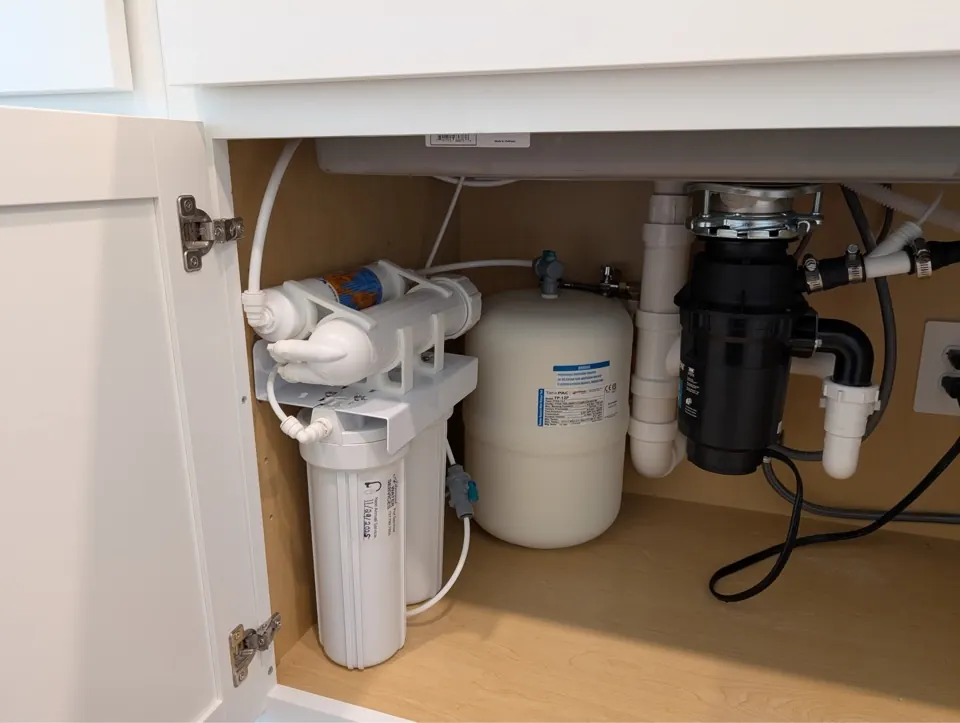
Key point: A rising product-water total dissolved solids reading is a signal to check the filters or membrane instead of guessing by the calendar.
What passes through the membrane
Aqua Pro's reverse osmosis guide says the membrane rejects the vast majority of dissolved solids, including lead, fluoride, and chlorine or chloramine tastes and odors. It also reports that many per- and polyfluoroalkyl substances are reduced according to membrane manufacturer test data—not as a blanket promise for every compound.
- It is a point-of-use system for drinking, cooking, and ice.
- It needs normal household pressure to perform.
- It does not disinfect microbiologically unsafe water.
What it does not fix
Hard water remains the softener's job. Aqua Pro warns that calcium and magnesium shorten membrane life and that running hard water through a membrane without needed softening can mean buying membranes more often.
- Reverse osmosis does not soften the whole house.
- It does not remove every contaminant.
- The water test decides whether softening belongs ahead of it.
Use the readout
Aqua Pro builds its systems with a digital quality readout showing the dissolved-solids level in the product water. When the number climbs, the membrane or filters need attention.
Sources
- Aqua Pro Services, “Reverse Osmosis Drinking Water,” staged site copy on file.