 Water Treatment Market
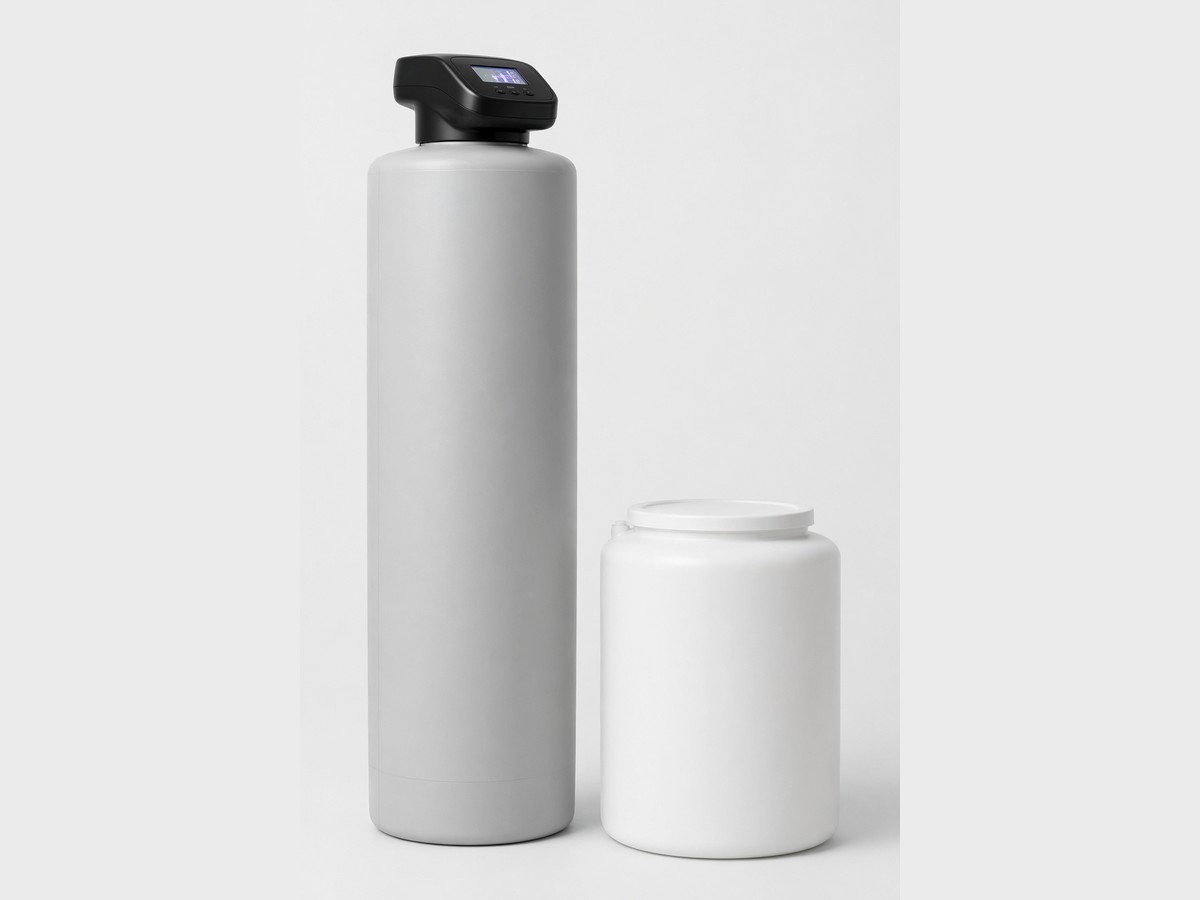
Where the sodium comes from
A softener's resin beads grab calcium and magnesium — the hardness — and swap in sodium in their place. When the resin fills up, the system flushes itself with a salt-water rinse and starts over. The sodium in your glass is the swap, measured: roughly 7 to 8 milligrams per liter for every grain of hardness removed, so the softer your source water starts, the less sodium the swap adds.
- At about 14 grains of hardness: roughly 100 milligrams of sodium per liter.
- In an 8-ounce glass: about 24 milligrams.
- For scale, a slice of white bread carries about 160 milligrams.
Who should plan around it
For most households the number is a footnote. On a strict low-sodium diet, it deserves a plan, and the softener guide on file names the two standard ones: leave the kitchen cold line unsoftened, or put a small reverse osmosis unit under the sink for drinking and cooking water. Reverse osmosis removes the sodium along with the other dissolved solids, which closes the question at the tap you drink from.
What does not help
Turning the softener down does not split the difference — a softener set wrong gives you hard water and the sodium. The choice is binary per line: soften the house and treat the drinking tap, or leave a line unsoftened. Both are ordinary installs when they are planned at the start.
Sources
- Aqua Pro Services water softener guide, on file (sodium exchange figures: roughly 7–8 milligrams per liter per grain removed; about 24 milligrams per 8-ounce glass at 14 grains; Food and Drug Administration “very low sodium” grade; kitchen cold line and under-sink reverse osmosis options).