 Water Treatment Market
1. The bypass (V3006)
On the back of the valve, where the pipes connect, sits a block with two red arrow handles — the Clack V3006 bypass. In service, the inlet arrow points into the valve and the outlet arrow points out to the house. Turn both handles a quarter turn until the arrow tips point at each other, into the center, and the softener is cut off: the house gets hard water and the unit cannot flood anything. Leaking or running nonstop? Bypass first, then think. Stiff handles on a valve nobody has touched in years are normal — open a faucet to drop the pressure, and never force one with a wrench.
2. The clock, and 3. a regeneration by hand
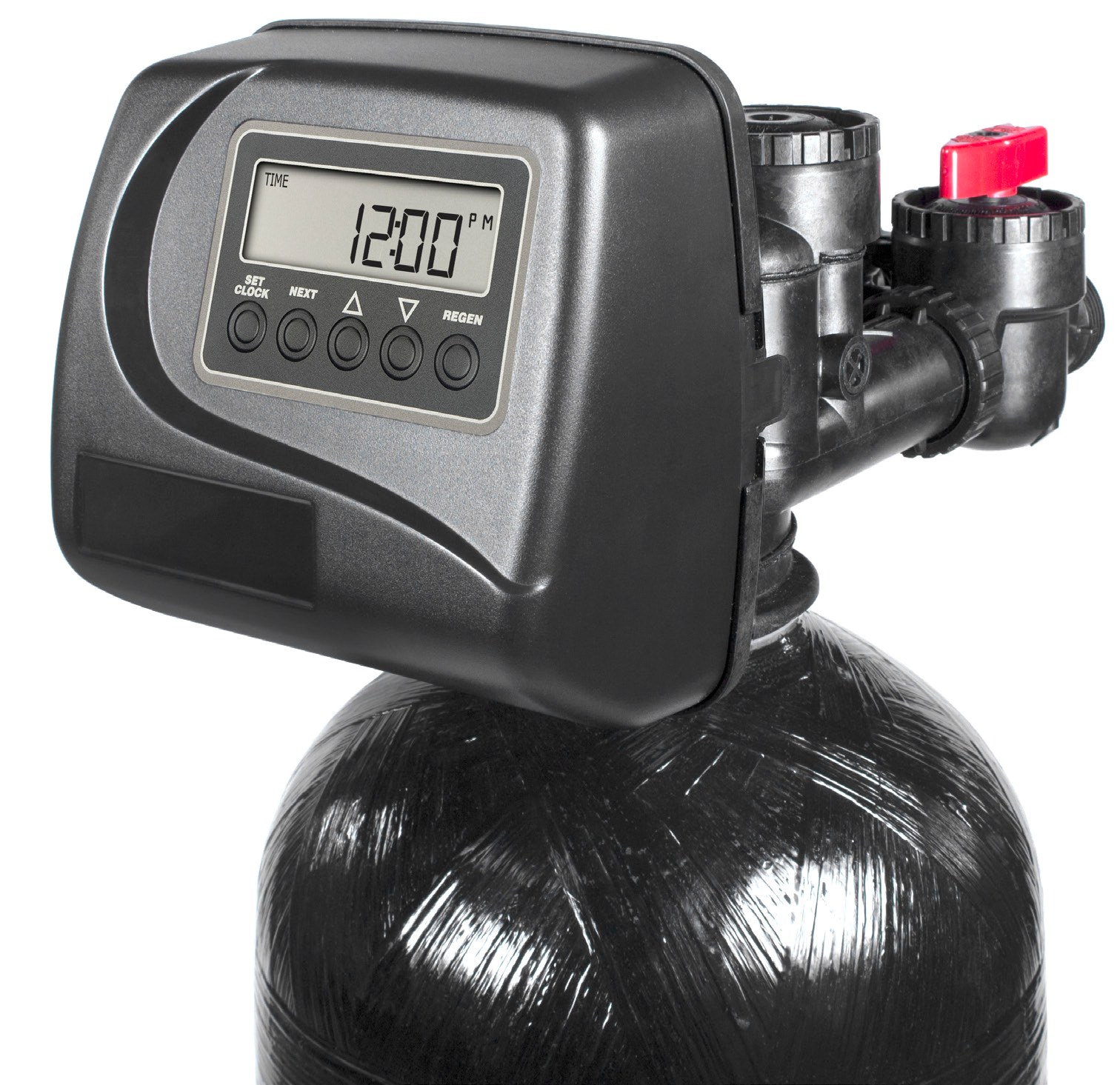
- After an outage, a flashing time display means the clock was lost. Press SET CLOCK, set the hour with the up and down arrows (watch the AM/PM), press NEXT, set the minutes, press NEXT. Confirm the regeneration time — 2:00 a.m. is the standard.
- Regeneration tonight: press and release REGEN, and “REGEN TODAY” flashes; it runs at the normal time.
- Regeneration right now: press and hold REGEN for three seconds. It starts immediately and cannot be cancelled.
- If the salt tank was empty, fill it and wait at least two hours before regenerating — that note is the manual's own.
4. Hardness setting, and 5. salt
The hardness number tells the valve how often to regenerate, and it was set from your water test at install — Clearwater city water runs about 14 grains; wells vary widely. Your number is on the settings card at your unit. A couple of grains either way is a safe band; way high burns salt, way low lets the water quietly go hard. The deep settings behind it are installer territory. For salt: pellets, tank covered, checked monthly, kept above the water line. A full-looking tank with hard water is often a salt bridge — a hollow crust — so poke it with a broom handle before blaming the valve. Valve internals and board programming belong to the service manual, not this page.
Sources
- Clack Corporation, WS1 & WS1.25 Drawings and Service Manual (Form V3115-99) and WS1CS & WS1.25CS Operation and Instruction Manual — verified copies and verification log on file (manual-sources record, 2026-11-02): bypass positions, SET CLOCK steps, REGEN behavior, two-hour salt note.
- Aqua Pro Services Clack WS1 quick guide, staged copy on file (owner-level wording, re-verified against the manuals).