 Water Treatment Market
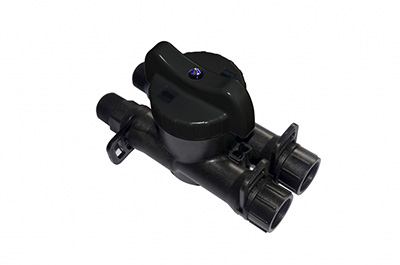
Key point: REV4 systems shipped with two bypasses: the current ceramic handwheel (part 41206) and an older push-pull knob (part 41204). On the push-pull, published sources disagree about which direction is service — check your unit's markings instead of trusting any picture, including ours.
1. The bypass — identify yours first
- Ceramic bypass (41206, the current standard, section 6 of the manual): a block on the back of the valve with one round handwheel on top, turning a ceramic disc inside. Turn it slowly — the startup guides for these valves say the same, because slamming a ceramic-disc valve is how parts chip. Wheel to bypass isolates the softener; wheel back to service restores it.
- Push-pull bypass (41204, older units): a flanged knob on the end of the block instead of a wheel; nothing turns — the knob slides in and out on a single piston. It is a system-level fitting, so its presence depends on who built the system around the valve.
- Honest flag: the manufacturer's own table for this part and a dealer guide disagree about whether service is knob-in or knob-out. Verify against the markings on your unit, or test with a faucet, before relying on either direction.
- Leaking or running nonstop? Bypass first (whichever style you have), main shutoff second if water is still coming, then think.
2. The display lock, and 3. modes
- The display locks itself after five minutes without use. A dead-feeling screen is usually just locked: press and hold the up and down arrows together for about three seconds, until the padlock in the corner of the screen disappears.
- Time of day: if it is wrong after a long outage, regeneration lands at the wrong hour. Reset it and confirm the regeneration time — 2:00 a.m. is the standard.
- The REV4 thinks in modes, A-01 through A-07 (section 7 of the manual): metered, timer, and comparison modes that watch usage and schedule regeneration. Your mode was chosen for your water at install and is on the settings card at your unit. Modes are not a menu to browse.
- If it regenerates at odd hours or seems to run forever, note the mode shown on the display before calling anyone — that one detail cuts diagnostic time in half.
4. Salt, and a sulfur note
Pellets, covered tank, monthly check, salt above the water line — the same salt discipline as every valve in this library. One REV4-specific note: these valves often run on sulfur systems as one piece of a matched setup. If the rotten-egg smell comes back, that is a service call about the system, not a settings problem to go hunting for in the valve's programming.
Sources
- Hankscraft Runxin, RevV4 Valves & Systems Service Manual (section 6, Ceramic Bypasses 41206/41207; section 7, Programming Modes A-01 to A-07; keypad lock and unlock) — verified copy and verification log on file (manual-sources record, 2026-11-02), including the logged conflict over the 41204 push-pull direction.
- Aqua Pro Services Hankscraft REV4 quick guide, staged copy on file.