Sulfur and Hydrogen Sulfide in Well Water
The rotten-egg smell has more than one possible source. Where the smell appears is the first useful clue.
 Water Treatment Market
Know Your Water. Hire Verified. Buy Right.
Start with the symptom you can see, smell, taste, or measure. Every problem has its own page, its own scale, and its own next step.
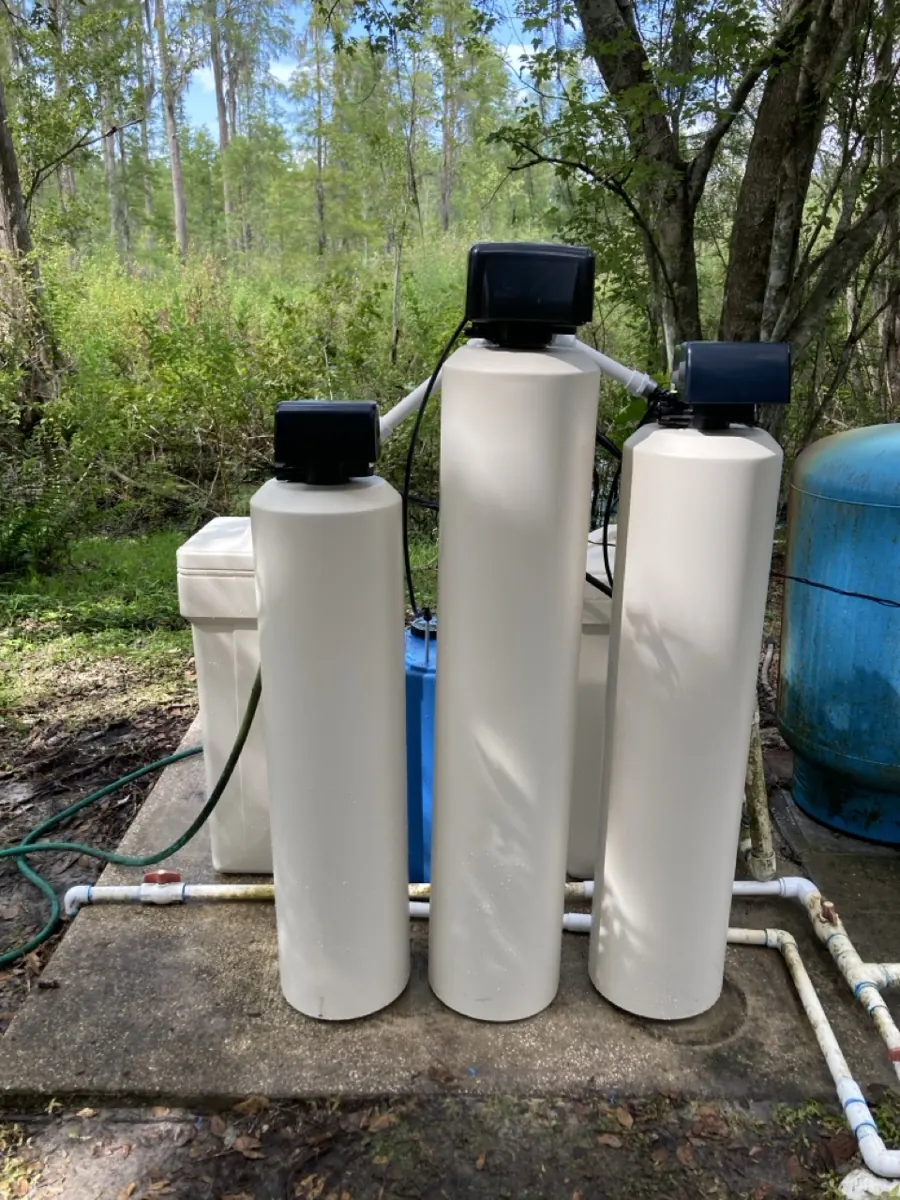
The rotten-egg smell has more than one possible source. Where the smell appears is the first useful clue.
Iron usually announces itself in orange. Manganese is the darker companion—and its guideline is much lower.
A hardness number becomes useful when it sits on a scale—and when you know whether it came from your tap or a county average.
A tea-colored tint is a clue. It is not automatic proof that a dedicated tannin system belongs in the first quote.
Both disinfectants share the same federal benchmark, but they behave differently in pipes and in filters.
Bacteria do not announce themselves with a stain or a smell. For a private well, the test is the warning system.
pH is one scale, not a complete water test. It also does not measure hardness.
Sand, silt, and rust flakes make water cloudy and gritty. Where sediment comes from, how micron ratings work, and when a cartridge is the whole fix.
Lead and copper enter water from pipes, not the treatment plant. The federal action levels, the 90th percentile, and why your own tap test is the real one.
Nitrate is invisible and matters most for infants. Florida’s annual testing advice, the federal 10 mg/L limit, and what actually removes it.
The 2024 federal limits of 4 parts per trillion, Tampa Bay’s measured numbers, why only a certified lab can test, and what treatment works.
After the 2025 state law, Dunedin and Pinellas stopped adding fluoride. Natural levels remain, and the federal cap sits at 4.0 ppm.
Black stains and a bitter, metallic taste. The two federal numbers that matter—0.05 mg/L for staining, 0.3 mg/L health advisory—and the fixes.
A softener swaps hardness for a little sodium—about 7 to 8 milligrams per liter for every grain removed. The math, the bread comparison, and your options.